
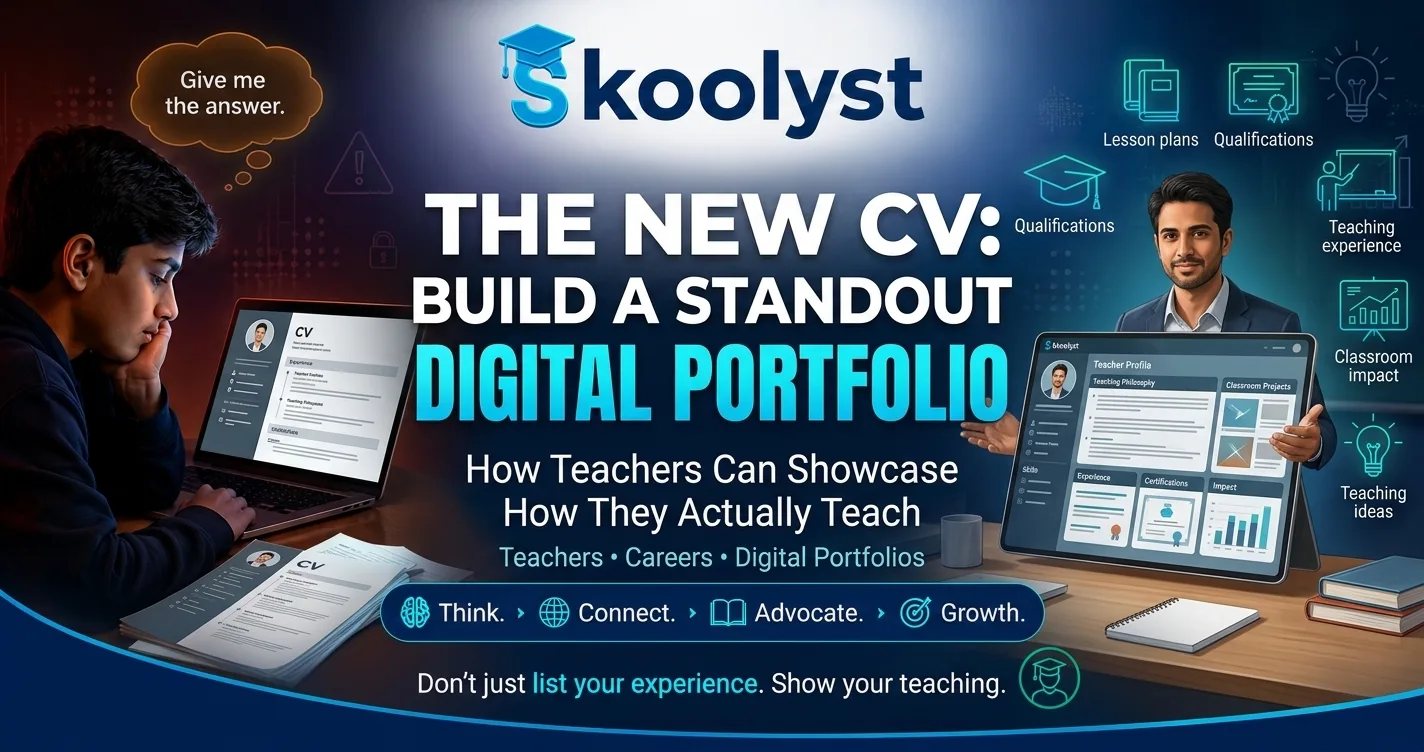
Why a CV Alone No Longer Tells Your Whole Story
A resume can tell a hiring committee where you've worked and what you're certified to teach. It can't show them how you actually run a classroom, how students respond to your teaching style, or what your lesson planning looks like in practice. In a hiring landscape shaped by the global teacher shortage, schools increasingly want to see more than a list of past positions — they want a sense of who you are as a teacher before they ever sit in your classroom.
A digital portfolio fills exactly that gap. It's not a replacement for your CV — it's the evidence behind it.
Portfolio vs. CV — What's the Actual Difference?
What a CV is built to show
A CV is a structured summary: where you worked, what you're qualified to teach, your education and certifications, in a standardized, easy-to-scan format.
What a portfolio is built to show
A portfolio shows your actual work — lesson plans, classroom projects, your teaching philosophy, evidence of how students grew under your instruction. It's less about listing your history and more about demonstrating your practice.
Why schools increasingly want both
A CV answers "are you qualified?" A portfolio answers "what are you actually like as a teacher?" — a question that matters enormously to a hiring school, but one a CV alone was never designed to answer.
What to Include in a Teaching Portfolio
A clear teaching philosophy statement
A short, specific statement of how you approach teaching — not a vague mission statement, but a concrete description of what you prioritize in a classroom and why, ideally illustrated with a real example.
Lesson plans and unit samples
A handful of your strongest lesson plans or unit designs, chosen to show range — different subjects, formats, or teaching approaches, rather than many similar examples. A unit built around responsible AI use, similar in spirit to our guide to using AI to learn, not cheat, is a good example of a shareable artifact that demonstrates current, relevant pedagogy without involving any individual student's work.
Evidence of student growth — done privately and ethically
Anonymized or aggregated examples of student progress (a described outcome, a redacted work sample, a summary of results) can meaningfully demonstrate impact without identifying any individual student.
Professional development and certifications
Ongoing training, workshops, and certifications show a hiring school that you're actively developing your practice, not simply maintaining a credential earned years ago.
Recommendations and endorsements
Short, specific endorsements from colleagues, administrators, or mentors — ideally speaking to a particular strength or moment, not a generic compliment — carry real weight in a portfolio.
How to Show Impact Without Violating Student Privacy
What you can share safely
Aggregated or anonymized outcomes (e.g., "80% of students in this unit improved their assessment scores by at least one grade band"), your own reflections and lesson materials, and general descriptions of classroom projects are generally safe to share.
What to avoid entirely
Avoid sharing individually identifiable student work, photos of students, grades tied to a named student, or any personal details about a specific child — even with good intentions, this can create real privacy and safeguarding concerns.
Getting proper consent when in doubt
If you're ever unsure whether something is shareable, treat it as not shareable until you've confirmed otherwise with your school's policy or, where relevant, a parent's explicit consent — and be aware that data protection and child-safeguarding rules vary by country and school system, so check what applies specifically to you rather than assuming a general rule of thumb covers it.
Building Your Portfolio Step by Step
Start with what you already have
Most teachers already have lesson plans, past evaluations, and project examples sitting in old folders — start by gathering and reviewing what already exists before creating anything new.
Choose a format that's easy to update
A portfolio you have to rebuild from scratch each time you add something new will quickly go stale. Choose a format — a dedicated teacher-portfolio platform, a simple personal website, or a well-organized document — that makes it easy to add a new piece of evidence as your career develops.
Keep it focused, not exhaustive
A tightly curated portfolio of your strongest 8–10 pieces of evidence is more effective than an exhaustive archive of everything you've ever done — quality and relevance matter more than volume.
If You're a New Teacher With Little Experience Yet
A thin work history doesn't mean a thin portfolio. Student-teaching lesson plans, coursework projects, volunteer or tutoring experience, and a well-articulated teaching philosophy can all demonstrate real potential, even without years of classroom experience behind them. Hiring schools generally understand this — what they're looking for from a newer teacher is thoughtfulness and clear direction, not a decade of results.
Where to Host and Share Your Portfolio
Options range from a simple personal website to a dedicated teacher-portfolio platform designed specifically for educators — the latter often makes it easier for schools to find and evaluate you directly, without you having to distribute a link individually to every application. You can create a verified profile on Skoolyst Teachers to house your portfolio in a format schools are already searching, rather than building and promoting a standalone site from scratch.
The Bottom Line
Your CV gets you noticed. Your portfolio is what actually convinces someone you're the right teacher for their classroom. In a hiring environment shaped by a genuine shortage of qualified teachers, a well-built, ethically thoughtful portfolio isn't just a nice-to-have anymore — it's a real, practical advantage. Skoolyst Teachers exists to give that advantage a home, connecting the evidence of your teaching practice directly with the schools and families looking for exactly what you offer.
Frequently Asked Questions
What is a teaching portfolio and why do I need one? A teaching portfolio is a curated collection of evidence — lesson plans, a teaching philosophy, examples of student growth — that shows how you actually teach, complementing the qualifications listed on your CV.
What should a teacher's digital portfolio include? A strong portfolio typically includes a teaching philosophy statement, sample lesson plans, anonymized evidence of student outcomes, professional development records, and endorsements from colleagues or administrators.
How is a teaching portfolio different from a resume? A resume summarizes your work history and qualifications; a portfolio demonstrates your actual teaching practice and impact through real examples of your work.
Do schools actually look at teacher portfolios? Many hiring schools increasingly value portfolios as a way to assess a candidate's actual teaching practice beyond what a resume can show, particularly for roles where classroom style and approach matter significantly.
How can teachers showcase student outcomes without violating privacy? Use aggregated or anonymized data rather than individually identifiable student work, avoid sharing named students' grades or photos, and check your school's specific privacy and consent requirements before sharing anything you're unsure about.
Comments (0)
Be the first to comment.
Leave a comment